The core is the foundation for all movement when it comes to building strength and stability. For women, developing strong core muscles not only enhances athletic performance but also improves posture, balance, and overall functional movement. This article will highlight seven scientifically-backed core exercises for women, incorporating variations and modifications to suit different fitness levels. These exercises were selected based on their efficacy in activating the core muscles while avoiding strain on other body parts.
Why Core Exercises for Women Are Essential
Core exercises for women are essential for maintaining strength, stability, and balance in everyday movements. A strong core helps prevent injuries, especially to the lower back, and supports overall posture and functional movement. Women, in particular, benefit from core training as it plays a vital role in stabilizing the pelvis and spine during daily tasks and athletic endeavors. Core exercises for women help improve endurance and allow for better control of the body during physical activities such as running, lifting, and even during yoga practice.
Benefits of Core Exercises for Women in Pregnancy
Core exercises for women also play an important role during pregnancy, as a strong core can support the additional weight and changes in the body. Engaging in safe and effective core exercises during pregnancy can alleviate lower back pain, reduce pelvic discomfort, and help maintain posture as the pregnancy progresses. Research has shown that core exercises for women during pregnancy can lead to easier labor and recovery, as the muscles of the core, including the pelvic floor, are engaged and strengthened. Of course, women need to consult with a healthcare provider to ensure the exercises are safe for their specific stage of pregnancy.
Core Exercises for Women and Everyday Functionality
Incorporating core exercises for women into a regular fitness routine can greatly enhance everyday functionality. Whether you’re lifting groceries, playing with children, or simply walking up a flight of stairs, a strong core provides stability and makes these movements more efficient. Core exercises for women help improve overall muscle coordination, allowing the body to move as a unit rather than relying on individual muscle groups. This translates to better movement patterns, reduced risk of injury, and a higher quality of life as women age, ensuring longevity in both fitness and daily activities.

1. Plank Variations
The plank is a classic exercise that engages the entire core, including the rectus abdominis, transverse abdominis, and obliques. Multiple studies have demonstrated the effectiveness of plank exercises in core muscle engagement. A study published in the Journal of Strength and Conditioning Research found that the forearm plank activates the core muscles more effectively than many traditional abdominal exercises, such as crunches.
- Forearm Plank: Begin in a forearm plank position with elbows directly under the shoulders. Keep the body straight from head to heels, engaging the core.
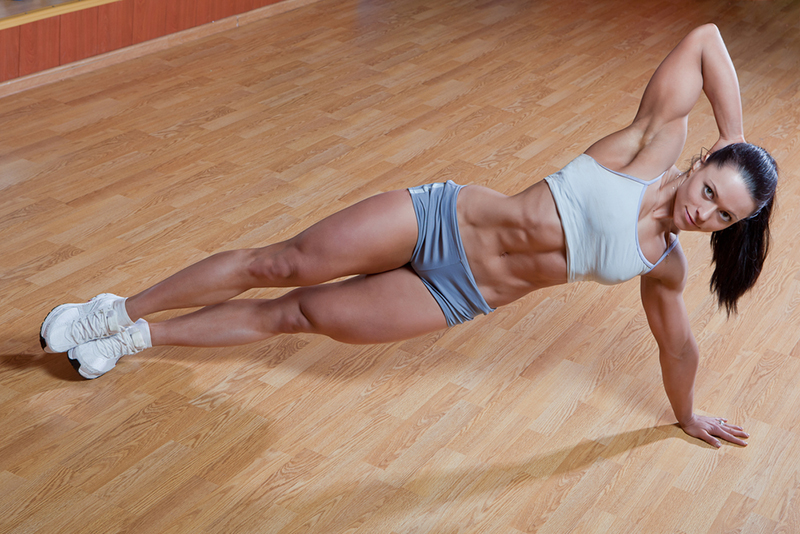
- Side Plank: Rotate to one side, supporting the body on one forearm while lifting the opposite arm into the air. This variation focuses more on the obliques.
- Plank with Shoulder Taps: Lift one hand to tap the opposite shoulder from a high plank position. This forces the core to work harder to maintain stability.
Each variation provides a scalable challenge for women at different fitness levels while promoting core strength and endurance.
2. Hollow Body Hold
The hollow body hold is a gymnastics-inspired core exercise that primarily works the rectus abdominis and transverse abdominis. It requires isometric contraction, which engages deep core muscles to maintain stability.
- How to Perform: Lie on your back with legs extended and arms overhead. Lift your legs, arms, and upper back off the floor simultaneously, pressing the lower back into the ground. Hold this position for 15–30 seconds, gradually increasing the duration as your core strength improves.
Research from the International Journal of Sports Physical Therapy shows that isometric exercises like the hollow body hold are effective in targeting both superficial and deep core muscles, improving balance and core stability.
3. L-Sit
The L-sit is a challenging bodyweight exercise that strengthens the core while also engaging the shoulders and hip flexors.
- How to Perform: Sit on the floor with legs extended before you. Place your hands by your hips and press into the ground, lifting your body off the floor. Hold this position while keeping your legs straight, forming an “L” shape. Aim to hold for 5-10 seconds, gradually moving to longer holds.
According to research published in the Strength and Conditioning Journal, exercises like the L-sit increase core activation by forcing the body to stabilize under its own weight.
4. Suitcase Carry
The suitcase carries a unilateral exercise and challenges the core muscles to stabilize the torso while carrying weight on one side. This exercise targets the obliques, transverse abdominis, and lower back.
- How to Perform: Hold a dumbbell or kettlebell in one hand, keeping your arm straight by your side. Walk a set distance while keeping your torso upright and core engaged to prevent leaning. Switch sides and repeat.
Studies have shown that exercises involving asymmetrical loads, such as suitcase carrying, engage the core muscles more intensively than bilateral exercises.
5. Bicycle Crunches
Bicycle crunches are a dynamic exercise that activates the rectus abdominis and obliques simultaneously, making them highly efficient for targeting the entire core.
- How to Perform: Lie on your back with hands behind your head and legs lifted. Bring one knee toward your chest while twisting your upper body to bring the opposite elbow to the knee. Switch sides pedaling, keeping the core tight throughout the movement.
A study published in ACE Fitness Journal ranked bicycle crunches as one of the top exercises for abdominal muscle activation, making it a staple in core workout routines.
6. Pallof Press
The Pallof press is a resistance band exercise that challenges the core to resist rotation. It is a valuable anti-rotation movement that strengthens the transverse abdominis and obliques.
- How to Perform: Anchor a resistance band to a fixed point at chest height. Stand perpendicular to the anchor point, holding the band with both hands in front of your chest. Press the band forward while keeping your torso still and resisting the band’s pull. Return to the starting position.
Research published in the Journal of Orthopaedic and Sports Physical Therapy highlights the Pallof press as an effective anti-rotation core exercise, particularly for stabilizing the spine .
7. Single-Leg Romanian Deadlift
The single-leg Romanian deadlift is a compound movement that strengthens the posterior chain (glutes, hamstrings, and lower back) while requiring significant core stabilization to maintain balance.
- How to Perform: Hold a dumbbell in one hand and balance on the opposite leg. Hinge at the hips, lowering the weight toward the floor while keeping your back straight. Return to the standing position by engaging the glutes and core. Switch sides after each set.
A study published in the Journal of Strength and Conditioning Research demonstrated that unilateral exercises like the single-leg Romanian deadlift recruits the core muscles more than bilateral lifts.
Conclusion
Incorporating various core exercises for women is essential for developing functional strength, improving posture, and enhancing athletic performance. Each exercise listed targets the core differently, ensuring balanced muscle development. Scientific research supports these exercises as effective tools for strengthening the core muscles while minimizing injury risk.
By focusing on these movements, women can build a strong foundation that will improve their fitness and support their daily activities.