Introduction
Core strength is the foundation of overall fitness, and building it doesn’t require a gym membership or fancy equipment. Some of the most effective core workouts can be done at home, using just your body weight or minimal tools. A strong core supports better posture, enhances balance, and reduces the risk of injury, making it essential for beginners and advanced athletes.
In this article, we’ll explore ten core workouts at home that can help you build strength and stability. These exercises are backed by scientific research and designed to target all areas of your core, including the abdominals, obliques, and lower back.
Importance of Core Workouts at Home
Core workouts at home are convenient and highly effective for building strength and endurance. By focusing on exercises targeting the core muscles, you can enhance your balance and stability, both essential for everyday activities and athletic performance. Home workouts allow you to stay consistent without needing gym memberships or equipment, making them accessible to anyone with the discipline to follow a routine. Research has shown that consistent core strengthening improves overall posture and reduces the risk of lower back pain.
Customizing Your Core Workouts at Home
One of the benefits of doing core workouts at home is the ability to tailor exercises to your specific needs and fitness level. Whether you’re a beginner or an advanced athlete, core workouts can be adjusted in intensity by adding weights, increasing repetitions, or lengthening hold times. Incorporating tools like resistance bands or stability balls can further enhance your core workouts at home, providing a more challenging and engaging experience. This flexibility ensures that you continue to progress as your core strength improves.
Consistency in Core Workouts at Home
The key to seeing results with core workouts at home is consistency. Performing core exercises at least three to four times a week can lead to noticeable strength and muscle tone improvements. Setting aside time for core workouts at home helps you develop a regular fitness routine, which is crucial for long-term success. Studies confirm that incorporating core exercises into your daily schedule can help prevent injuries, improve mobility, and improve performance in other physical activities like running, cycling, and weightlifting.
1. Plank Hold
The plank is a classic core exercise that targets multiple muscles simultaneously. Research published in the Journal of Strength and Conditioning Research shows that the plank activates the rectus abdominis, transverse abdominis, and obliques, which are crucial for core stability. To perform the plank:
- Start in a push-up position, but rest your weight on your forearms instead of your hands.
- Keep your body straight from head to heels, engaging your core.
- Hold for 30 seconds to 1 minute, depending on your fitness level.
2. Bicycle Crunches
Bicycle crunches are an effective way to work both the upper and lower abdominals and the obliques. A study in the Journal of Applied Physiology found that bicycle crunches are among the best exercises for abdominal activation. Here’s how to do them:
- Lie on your back with your hands behind your head and legs lifted at a 90-degree angle.
- Bring your right elbow toward your left knee as you straighten your right leg.
- Alternate sides in a pedaling motion, performing 10-15 repetitions per side.
3. Russian Twists
Russian twists target the obliques and are a fantastic addition to your core workout routine. According to a study in the European Journal of Sport Science, rotational exercises like the Russian twist are key for improving oblique strength . To perform this move:
- Sit on the floor with your knees bent and feet flat.
- Lean back slightly and lift your feet a few inches off the ground.
- Twist your torso from side to side, tapping the floor on each side with your hands.
- Aim for 20 twists (10 per side).
4. Dead Bug
The dead bug is a highly effective exercise for improving core stability and reducing lower back pain. Research from Spine Journal indicates that it helps activate the deep stabilizing muscles of the core without placing stress on the spine . To perform the dead bug:
- Lie on your back with your arms extended toward the ceiling and legs bent at a 90-degree angle.
- Slowly lower your right arm and left leg toward the floor while keeping your core engaged.
- Return to the starting position and repeat on the other side.
- Perform 10 repetitions per side.

5. Mountain Climbers
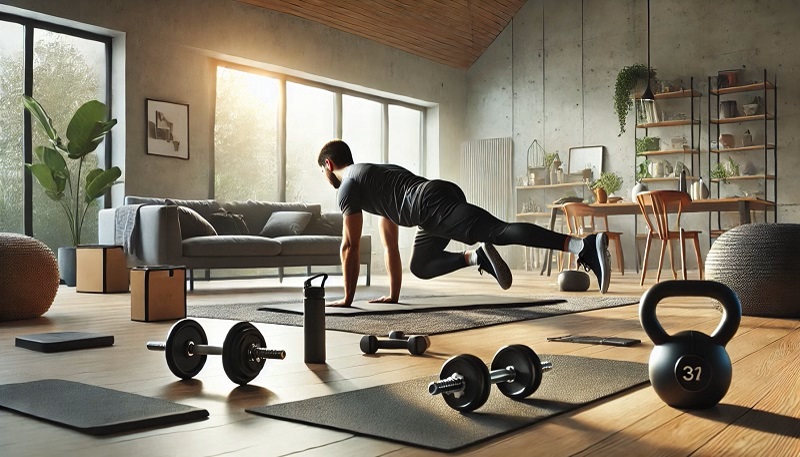
Mountain climbers are a dynamic core workout that also provides a cardiovascular challenge. An American Council on Exercise study found that this exercise significantly boosts abdominal endurance. Here’s how to perform it:
- Start in a plank position with your hands under your shoulders.
- Bring one knee toward your chest, then switch legs quickly in a running motion.
- Continue alternating legs for 30-60 seconds, focusing on keeping your core engaged.
6. V-Ups
V-ups are a challenging but rewarding core exercise that targets the entire abdominal region. According to research published in the International Journal of Sports Science & Fitness, V-ups are highly effective for activating both the upper and lower abs. To perform V-ups:
- Lie on your back with your arms extended overhead and legs straight.
- Simultaneously lift your legs and upper body, reaching your hands toward your feet to form a “V” shape.
- Lower back down and repeat for 10-12 repetitions.
7. Leg Raises
Leg raises are excellent for targeting the lower abdominals, which can be hard to strengthen. A study in the Journal of Strength and Conditioning Research showed that leg raises are among the best exercises for lower abdominal activation. To perform leg raises:
- Lie on your back with your legs straight and hands at your sides.
- Slowly lift your legs until they’re perpendicular to the floor, keeping them straight.
- Lower them back down without touching the ground and repeat for 10-15 repetitions.
8. Flutter Kicks
Flutter kicks engage lower abs and hip flexors, helping build core endurance. Research in the Journal of Sports Medicine and Physical Fitness notes that this exercise effectively improves lower body and core strength. To perform flutter kicks:
- Lie on your back with your legs extended.
- Lift your feet about 6 inches off the ground.
- Rapidly alternate kicking your legs up and down for 30-60 seconds.
9. Bird Dog
The bird dog is a stability exercise that works your core, lower back, and glutes. A study in the Journal of Orthopaedic & Sports Physical Therapy showed that this exercise improves coordination and balance while strengthening the core. To perform the bird dog:
- Start on your hands and knees in a tabletop position.
- Extend your right arm and left leg simultaneously while keeping your core engaged.
- Return to the starting position and repeat on the other side.
- Perform 10 repetitions per side.
10. Side Plank
The side plank is an excellent way to target the obliques and improve lateral stability. According to a study published in the Strength and Conditioning Journal, the side plank significantly activates the oblique muscles and enhances core endurance. To perform the side plank:
- Lie on your side with your elbow directly under your shoulder and feet stacked.
- Lift your hips off the ground, forming a straight line from head to heels.
- Hold for 30-45 seconds on each side.
Conclusion
Incorporating these core workouts at home into your fitness routine can improve your strength, stability, and overall health. With no need for expensive equipment, these exercises are accessible to everyone, regardless of fitness level. As science has shown, a strong core is essential for reducing the risk of injury, improving posture, and enhancing athletic performance.